

Recognizing and understanding family violence is an important part of community safety.
Through The Today Centre's education program, we provide professional development training to support service providers working with victims and survivors of family violence. Training on topics related to family violence helps service providers gain the necessary knowledge and skills to help.

Participant Feedback
“Family violence is something that is quite common in my patient population, so it is important to be aware of and be educated in the basics so that I can better care for my patients and their families.”
99%
of participants in 2020/2021 said the workshop they attended will enhance their work with clients
The Today Centre Information Session
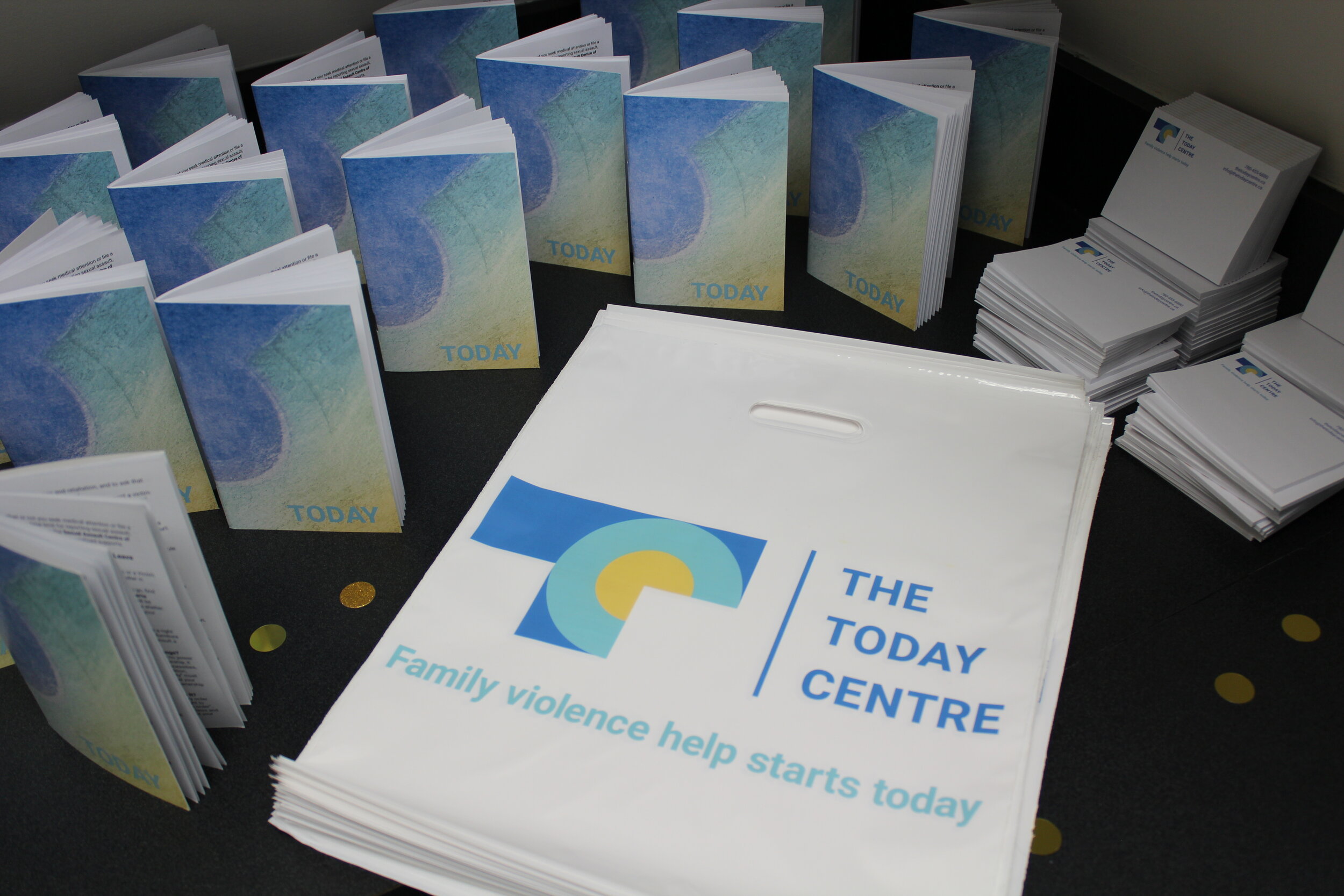
Learn more about how The Today Centre supports individuals and families experiencing family violence. In this one-hour session, participants will gain a better understanding of our programs and services, who we can support, and how our intake and referral process works. We will also share information about collaborative opportunities, educational services, and the many print resources available to community partners. This session can also be combined with a tour of the Centre for a fuller experience, extending the visit to approximately 1.5 hours.

an introduction to family violence
This is an introductory workshop for anyone who would like to learn the basics about family violence, or as a refresher. Participants will examine types of violence, understand the role of power and barriers to support, gain skills to better respond to disclosures, and information on community resources.
Please note, this 1 – 3 hour workshop can be customized to suit your agency’s needs.
This workshop can be delivered in person or virtually.
-
94% of respondents agreed or strongly agreed that “I have a clearer knowledge and understanding of family violence.
“Thank you so much for the insightful training session. Your in-depth knowledge and practical advice were incredibly valuable to me, and your engaging teaching style made the time fly by.” —Immigration & Settlement Worker, Catholic Social Services
“This workshop has significantly impacted my attitudes and beliefs about individuals experiencing family violence. It helped me better understand the complexity of family violence and the many barriers people face when trying to seek safety” —Norquest Social Work Student
“Strengthen the need to help support my clients who are experiencing family violence, and feel better prepared when discussing and helping my clients.” —Online participant

Family Violence: Spotlight Series
Built on our core Introduction to Family Violence training (no prerequisite required), these Spotlight sessions take a deeper look at specific and emerging topics related to family violence, helping participants better recognize risks, understand complex dynamics, and respond more effectively in their work and communities.
Spotlight on Health Care Needs and Risks
Discuss concussion, strangulation and brain injury risks and screening
Consider strategies for mitigating medication facilitated abuse
Recognize reproductive abuse, pregnancy risks, and maternal/fetal health risks
Learn about the role of charting as a safety planning strategy
Spotlight on Coercive Control
Recognize the dynamics of Coercive Control and its role in abusive relationships
Discuss emotional and psychological abuse tactics and impacts
Consider the role of stalking and criminal harassment in risk
Highlight current developments in criminalization of coercive control
Spotlight on Technology Facilitated Abuse
Recognize the roles of tech abuse as a tactic for monitoring and stalking, coercive control, and financial abuse
Consider key points of vulnerability to tech abuse, including children's access to technology based services
Recognize unique challenges to youth experiences of technology use and abuse
Discuss strategies to support those experiencing tech abuse in reducing risk
-
97% of respondents agreed or strongly agreed that “I have a clearer knowledge and understanding of family violence.
“I learned a lot today about the types of family violence, the prevalence of family violence, and the importance of having protocols in place to support this important topic” —Nurse, Boyle Street Health for Two
“It definitely helps supporting me to respond to family violence victims. I feel more comfortable to ask questions about family violence.” —Public Health Nurse, Boyle Street Health for Two

Foundations of Safety Planning
This training introduces the core concepts of safety planning for service providers supporting individuals experiencing family violence. Through activities, discussions, and case studies, participants will explore practical approaches to safety planning, including how it differs from and works alongside risk assessment. The session also highlights safety planning as a harm reduction strategy, including when individuals choose to remain in their current circumstances. Built on the foundation of our Introduction to Family Violence training (no prerequisite required), this session can also be customized with additional focus modules, including considerations for youth, technology-facilitated abuse, rural and remote communities, and sex and gender diverse communities.
-
93% of respondents agreed or strongly agreed that “I feel more confident in my skills to support a client through Safety Planning.”
“This has increased my capacity for sure. This is the second time i went through this and its impacts are great both times” —Madeleine S., Native Counselling Services of Alberta

Advanced Safety Planning in Family Violence
This two-day training, offered in partnership with EnCompass, provides a comprehensive and interactive exploration of advanced safety planning strategies for service providers and front-line staff supporting those experiencing family violence. Participants will deepen their skills in developing safety plans for individuals who are staying, preparing to leave, or navigating safety after leaving. The training also explores considerations such as stalking, tracking, and technological safety, as well as planning for the safety of children, pets, and workplaces. Through case studies, practical tools, and shared discussion, participants will also examine identity-related vulnerability factors and complex case considerations.
Completion of Introduction to Family Violence or equivalent training/experience is required.
-
97% of respondents agreed or strongly agreed that “I have a clearer knowledge and understanding of the concepts of Safety Planning.”
“I've worked with family violence for years, and there are things in this workshop I've never considered when it comes to safety planning. So helpful!! Everyone should take this.” —Natalie D., Edmonton South Primary Care Network
“I am better able to help keep my clients safe, including their children and pets. I am more informed on community resources and information to educate my clients! Before this training, I was unsure where to start when doing a safety plan, but after finishing the training I feel more confident in doing safety plans with individuals.” —Participant
100% of respondents agreed or strongly agreed that “I feel more confident in my skills to support a client through Safety Planning.”

Family violence Across the lifespan
This workshop will help service providers develop their skills in recognizing the ways that family violence may be experienced across the lifespan, and in supporting clients experiencing family violence at all points in their lives.
Participants will learn about types of abuse, cycle of abuse, dispel common family violence myths, understand barriers, safety planning and how to respond to disclosures. Participants will also examine impacts and unique needs to supporting those experiencing family violence across their life stages and ages.
No prerequisite training or background required; it is open to anyone who is interested in a deeper dive to get comfortable and familiar with this work.
This workshop can be delivered in person or virtually.
-
"This training has really helped me to reflect on aspects of family violence that I had not fully considered before. I think it will help me improve as a service provider because it made me more aware of the complexity of family violence issues.”
"This knowledge will allow me to better serve individuals in the community because I am more aware and able to reflect on the wide-reaching affects of family violence."
Looking for a short overview of our workshops all in one place? Check out our Workshops Guide available for PDF download using the button below.